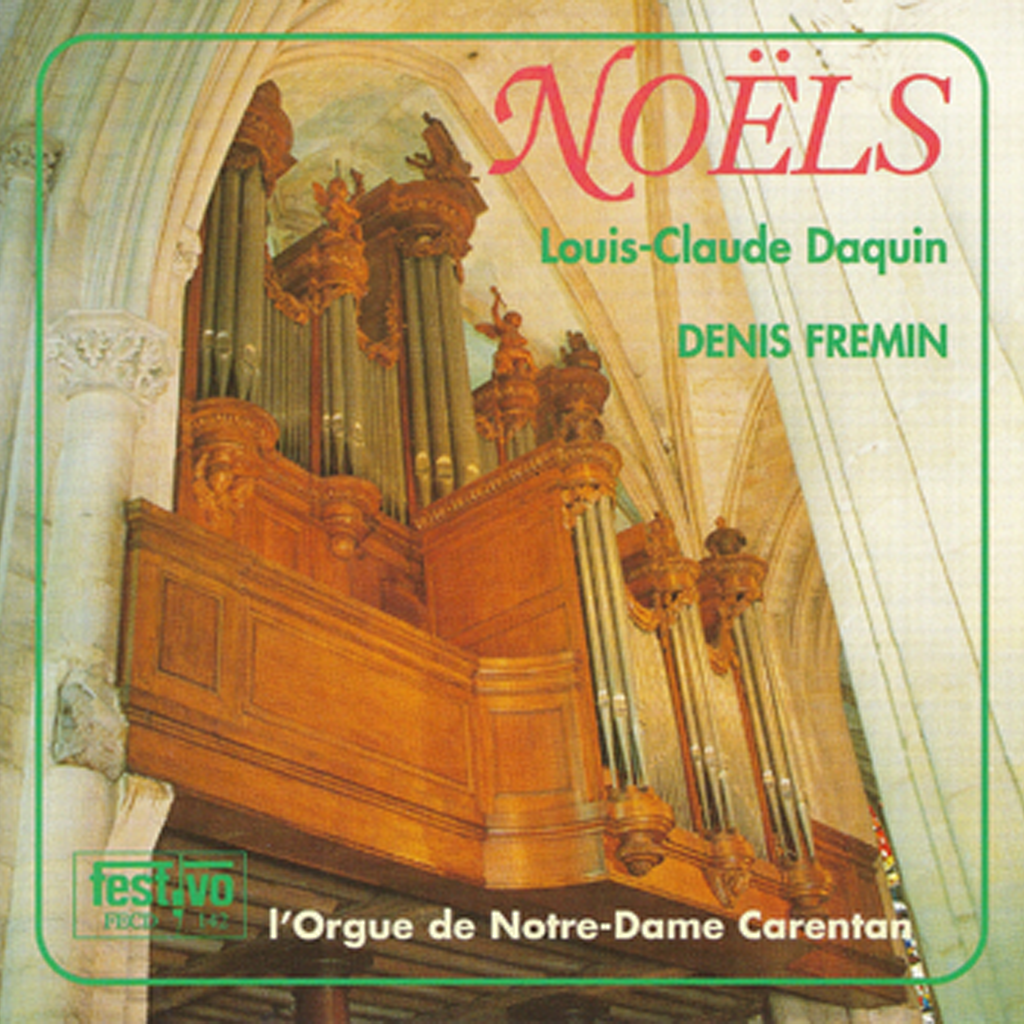
Louis-Claude Daquin
Daquin was a precocious child, already at the age of six he was praised by Louis XIV and at the age of eight he conducted his own composition Beatus Vir for great choir and orchestra.
As an organist, he occupied various positions in Paris; he was substitute organist of Marin de la Guerre in the Sainte Chapelle (1704), then afterwards organist of respectively the Petit St. Antoine (1706), the St. Paul (1727), the Cordeliers (1732), the Chapelle Royale (1739) and the Notre-Dame (1755).
"He has a firm and meticulous precision in the highest tempo of playing. He excels all virtuosos in the perfect synchronism of his two hands", according to Fontenay.
The influence of his teachers, Louis Marchand and Nicolas Bernier, combined with his great skill to play the organ and to improvise allowed Daquin to develop his own personal style. He was able to go against the bad taste prevalent at that time. According to Jean-Philippe Rameau, "everyone's taste changes...
Only Daquin has the courage to resist these passing fashions: he has retained the grandeur and grace belonging to the organ."
His musical legacy includes 1e Livre de Pièces pour Clavecin, one of the best of the French school and his Nouveau Livre de Noëls pour Orgue et le Clavecin, which has remained the classic example of volumes in this genre.
As an organist, he occupied various positions in Paris; he was substitute organist of Marin de la Guerre in the Sainte Chapelle (1704), then afterwards organist of respectively the Petit St. Antoine (1706), the St. Paul (1727), the Cordeliers (1732), the Chapelle Royale (1739) and the Notre-Dame (1755).
"He has a firm and meticulous precision in the highest tempo of playing. He excels all virtuosos in the perfect synchronism of his two hands", according to Fontenay.
The influence of his teachers, Louis Marchand and Nicolas Bernier, combined with his great skill to play the organ and to improvise allowed Daquin to develop his own personal style. He was able to go against the bad taste prevalent at that time. According to Jean-Philippe Rameau, "everyone's taste changes...
Only Daquin has the courage to resist these passing fashions: he has retained the grandeur and grace belonging to the organ."
His musical legacy includes 1e Livre de Pièces pour Clavecin, one of the best of the French school and his Nouveau Livre de Noëls pour Orgue et le Clavecin, which has remained the classic example of volumes in this genre.


Les Noëls de Louis-Claude Daquin
à l'Orgue..